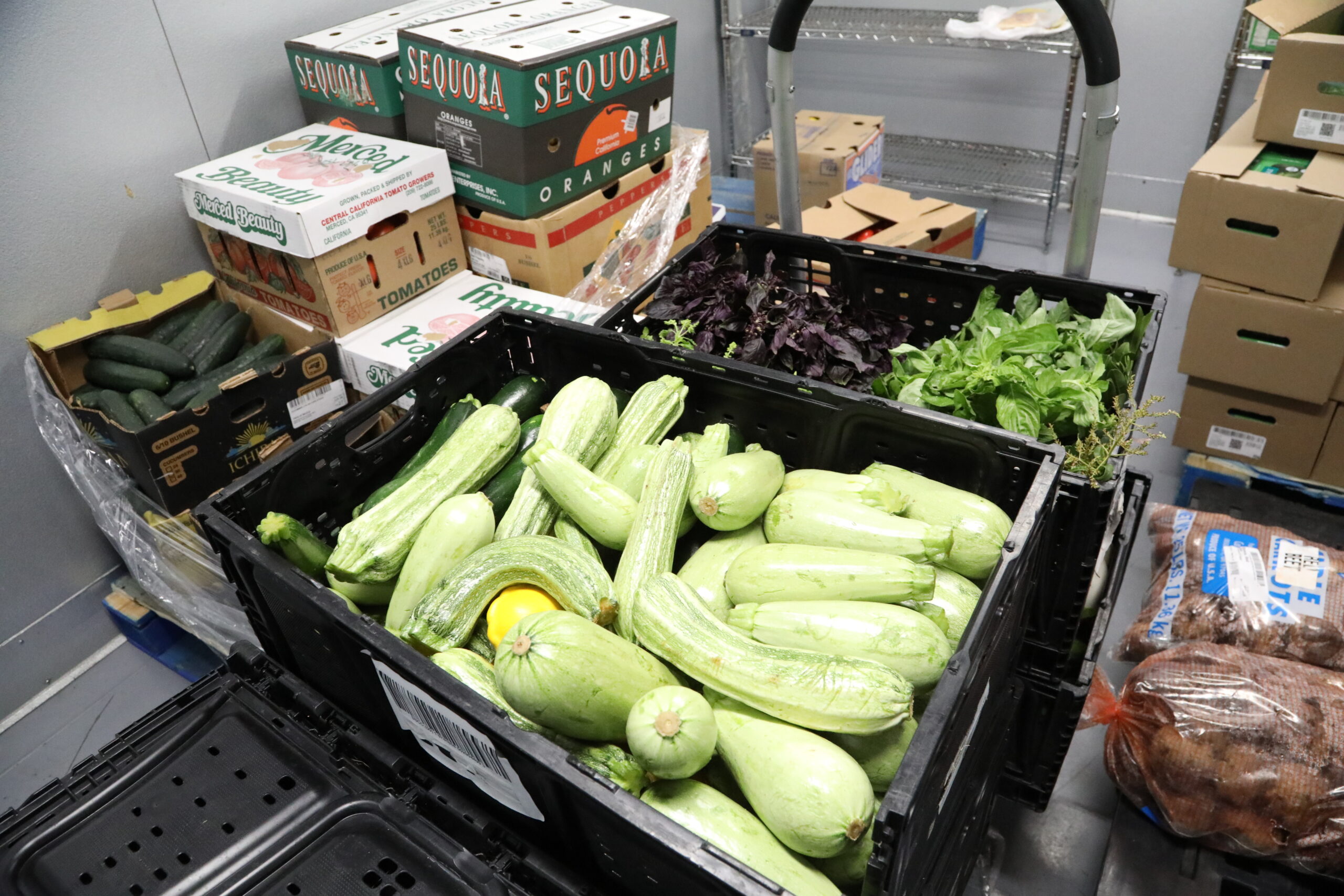
Every week, Sierra Community House rescues thousands of pounds of food from local grocery stores and redistributes it to neighbors across North Tahoe. Between June and November 2025 alone, monthly food rescue more than doubled, increasing from just over 10,000 pounds to more than 24,000 pounds of food per month kept out of landfills.
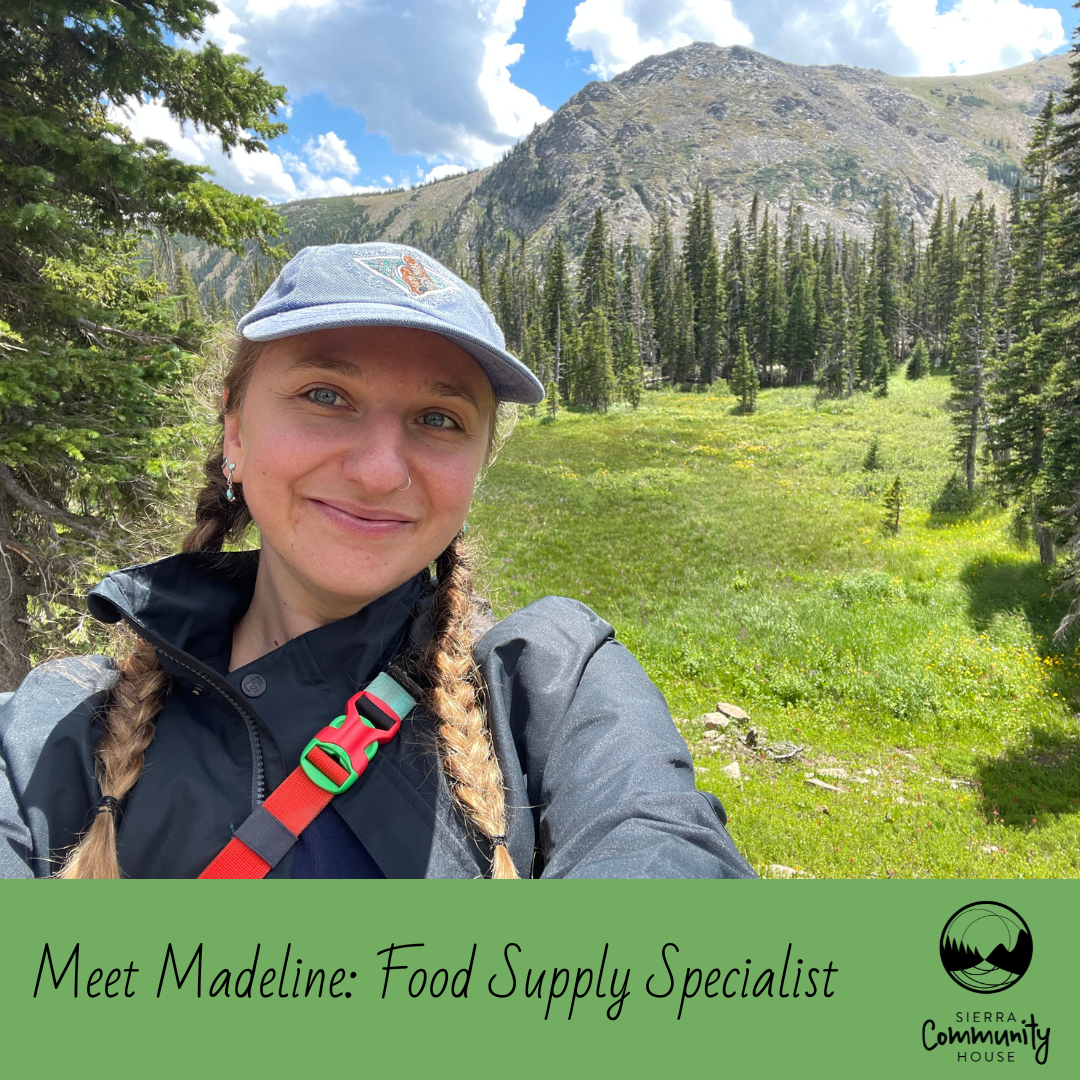
Much of that work is coordinated by Madeline, Sierra Community House’s Food Supply Specialist. With a background in food service and an interest in food systems and policy, she works closely with local markets to strengthen food rescue partnerships and support hunger relief in a mountain region where access challenges and climate impacts are often intensified.
We spoke with Madeline about her role, what food rescue looks like day to day, and why sharing food is one of the most powerful ways to build a stronger, healthier community. Read more below and know that we are grateful to generous donors and grantors to support this program, including: Safeway Foundation, Nourishing Neighbors O Organics, Lahontan Community Foundation, Raley’s Food for families, Truckee Cultural District, Tahoe Community Foundation, Food Bank of Northern Nevada and more.
Q: Can you tell us a little about yourself and what led you to your role as Food Supply Specialist at Sierra Community House?
A: My background in the food service industry and my BA in politics led me to an interest in local food systems and how food policy impacts people and the environment. The Food Supply Specialist position allows me to delve even deeper into how these systems function while also engaging directly with the community.
Q: What does a typical day look like for you, and how does food rescue fit into your daily work?
A: Much of my day is split into 2 categories: food rescue and food distribution. My mornings are spent picking up food donations from grocery stores around Truckee, then it’s all about preparing for our distributions! Alongside the rest of the Hunger Relief team I help to organize and load our truck with whatever is on the menu for that day.
Q: For those who may not be familiar, how would you explain food rescue and why it’s such an important part of hunger relief in our region?
A: When grocery stores aren’t able to sell certain foods for a variety of reasons, we can collect and distribute it rather than throwing it out. Food rescue keeps organic waste out of landfills while supporting our community. This is especially important in a small mountain setting like the Tahoe area, where issues like food insecurity and the effects of climate change can be magnified.
Q: How does Sierra Community House partner with local grocery stores and supermarkets, and what does that collaboration look like in practice?
A: We have relationships and agreements with grocery stores and markets around North Tahoe, and we are able to pick up thousands of pounds of food every week by coordinating with them.
Q: Can you share a moment or story from your food rescue work that really stuck with you or reminded you why this work matters?
A: I’m reminded often of why this work matters when I see people sharing recipes for lentils or beets or spaghetti squash with their neighbors. It reminds me that food brings us together and transcends socioeconomic and cultural boundaries.
Q: What kinds of food are most commonly rescued, and how do you ensure that rescued food is safe, dignified, and useful for the families we serve?
A: Day to day, we pick up everything from eggs and milk to bagels and peanut butter. We follow food safety protocols, nutrition guidelines, and care a lot about the quality and variety of food that’s distributed.
Q: How does food rescue help reduce food waste while also supporting families experiencing food insecurity?
A: By diverting food for distribution that otherwise would have gone to a landfill, the emission of methane and other air pollutants can be significantly reduced. Fuller bellies and cleaner air – win/win!
Q: In your view, how does hunger relief fit into Sierra Community House’s broader mission of supporting community safety, stability, and well-being?
A: Sustainable access to nutrition can support positive outcomes in every aspect of life. Issues like housing stability, education outcomes, mental and physical health, and food security are all intertwined. Sierra Community House is in a unique position to support the community in many of these areas, and I am lucky to contribute to such a well rounded effort.
Q: What do you hope people in our community understand about food insecurity and the role they can play in supporting this work?
A: Food is one of our most fundamental human needs, and also one of life’s greatest pleasures! Everyone can relate to the experience of enjoying a good meal and sharing it with others. I hope people can get excited about the opportunity to connect with neighbors in a meaningful way while building a stronger and healthier community.
Recent News